
Wave-Structure Interaction Training School
Trainee / Participant
An intensive 5-day training bridging physical wave tank experiments and numerical simulations using DualSPHysics for Wave Energy Converters.
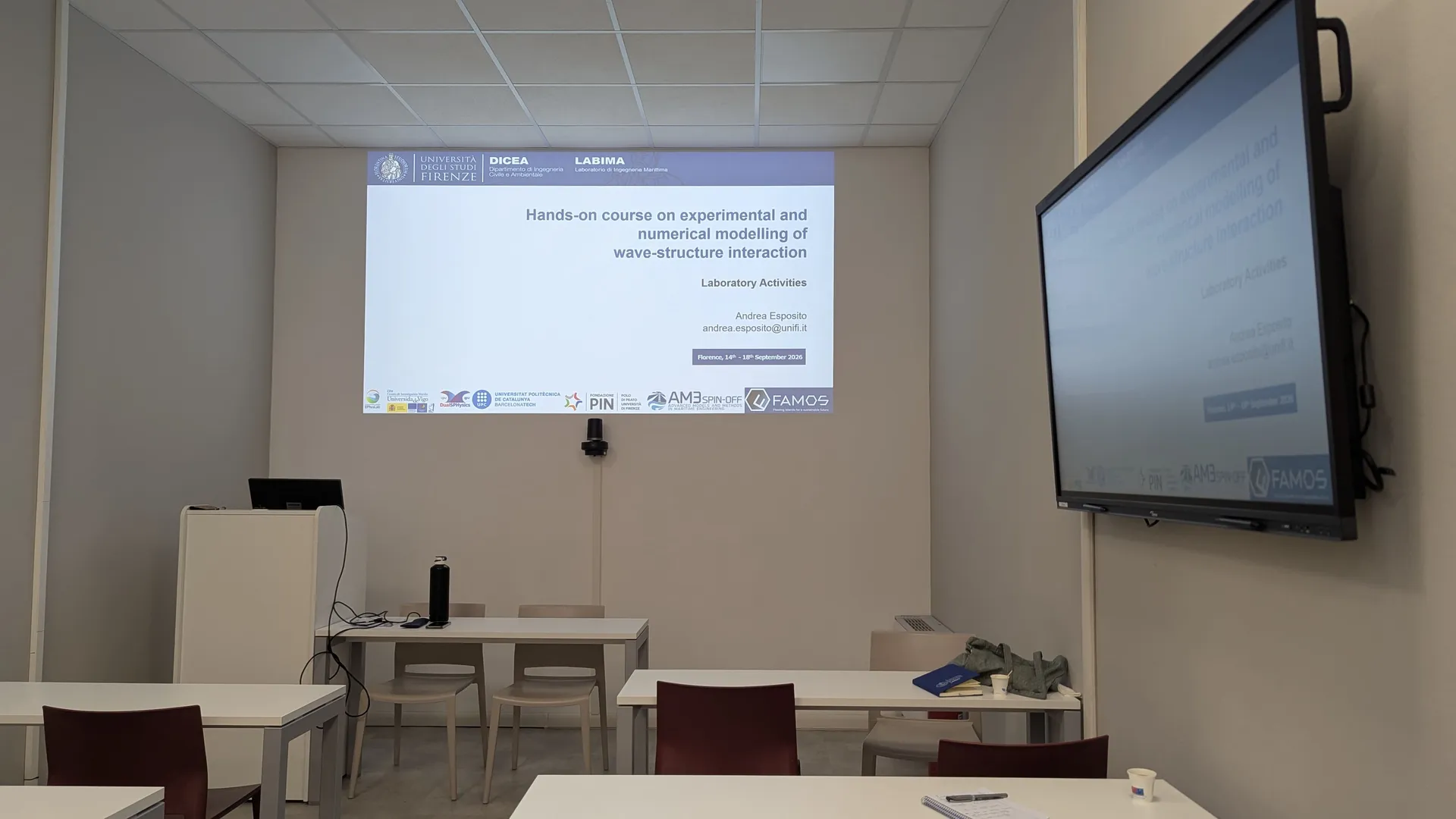
From September 14th to 18th, I attended the 5th edition of the Hands-on Course on Experimental and Numerical Modelling of Wave-Structure Interaction. Hosted by the University of Florence (UNIFI) in collaboration with the DualSPHysics development team, the training focused on evaluating Wave Energy Converters (WECs) using a Hybrid Wave Tank approach.
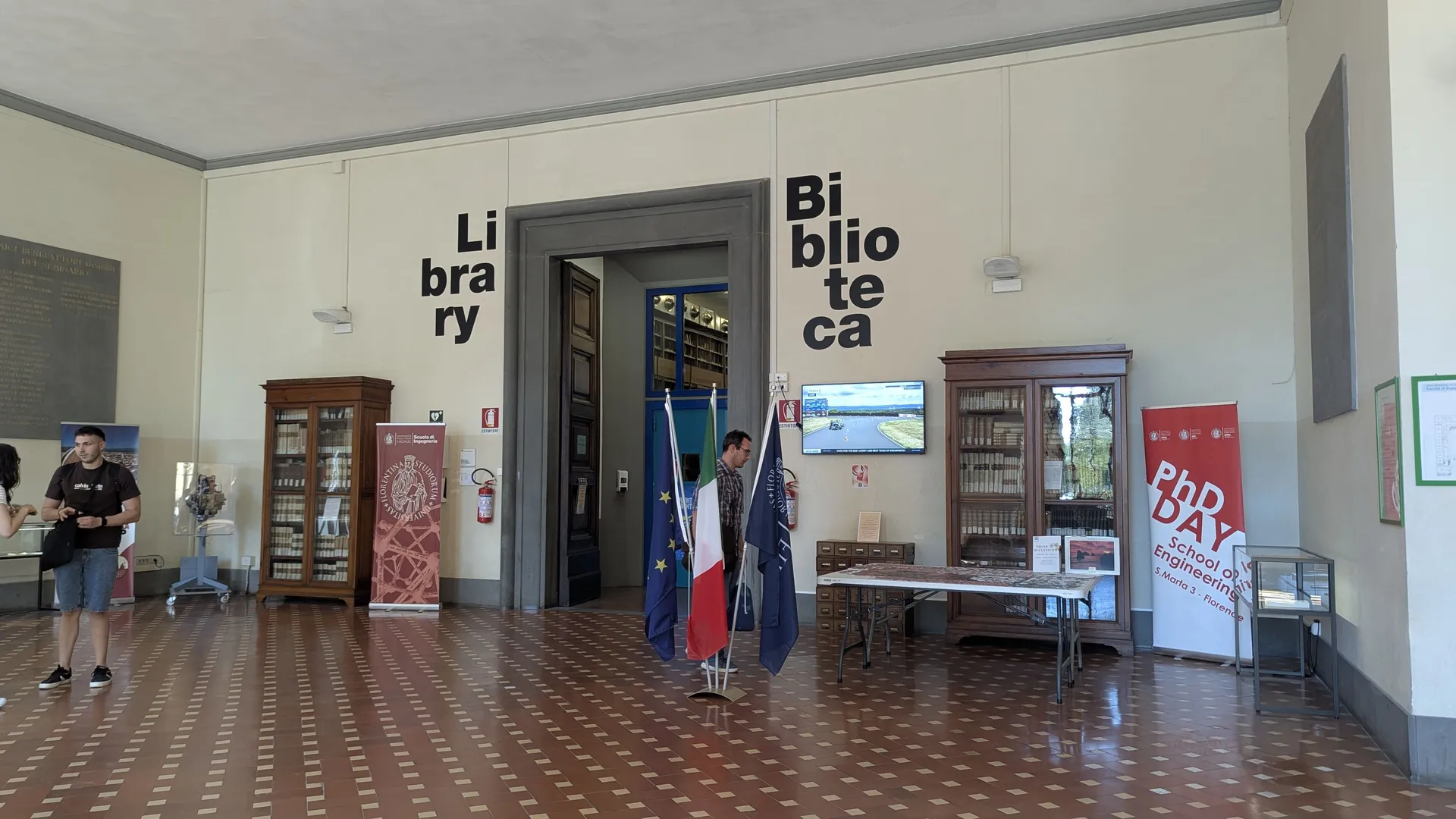
The setting itself was highly inspiring. Florence is globally recognized as a UNESCO World Heritage site, famous for its Renaissance architecture, the Uffizi Gallery, and its deep cultural history. Balancing our time between the historic beauty of the city and the modern research facilities at the School of Engineering provided a highly memorable backdrop for the week.
The core mission of the course was to demonstrate that experimental and numerical modeling are not competing disciplines, but complementary tools. Over five days, we worked in teams to model the exact same wave conditions and structures in both a physical wave flume and a computational solver.
Phase 1: The Physical Wave Flume
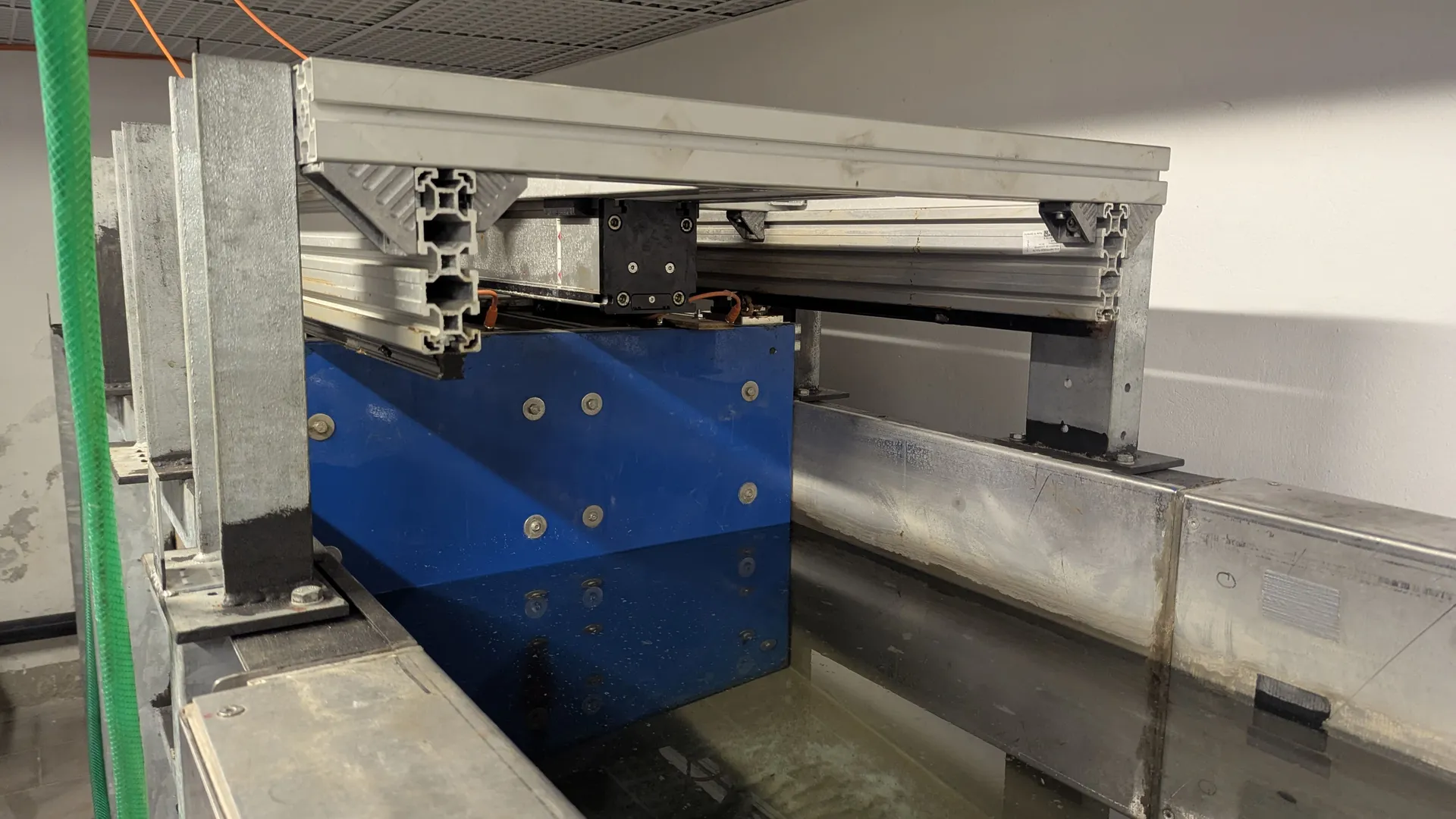
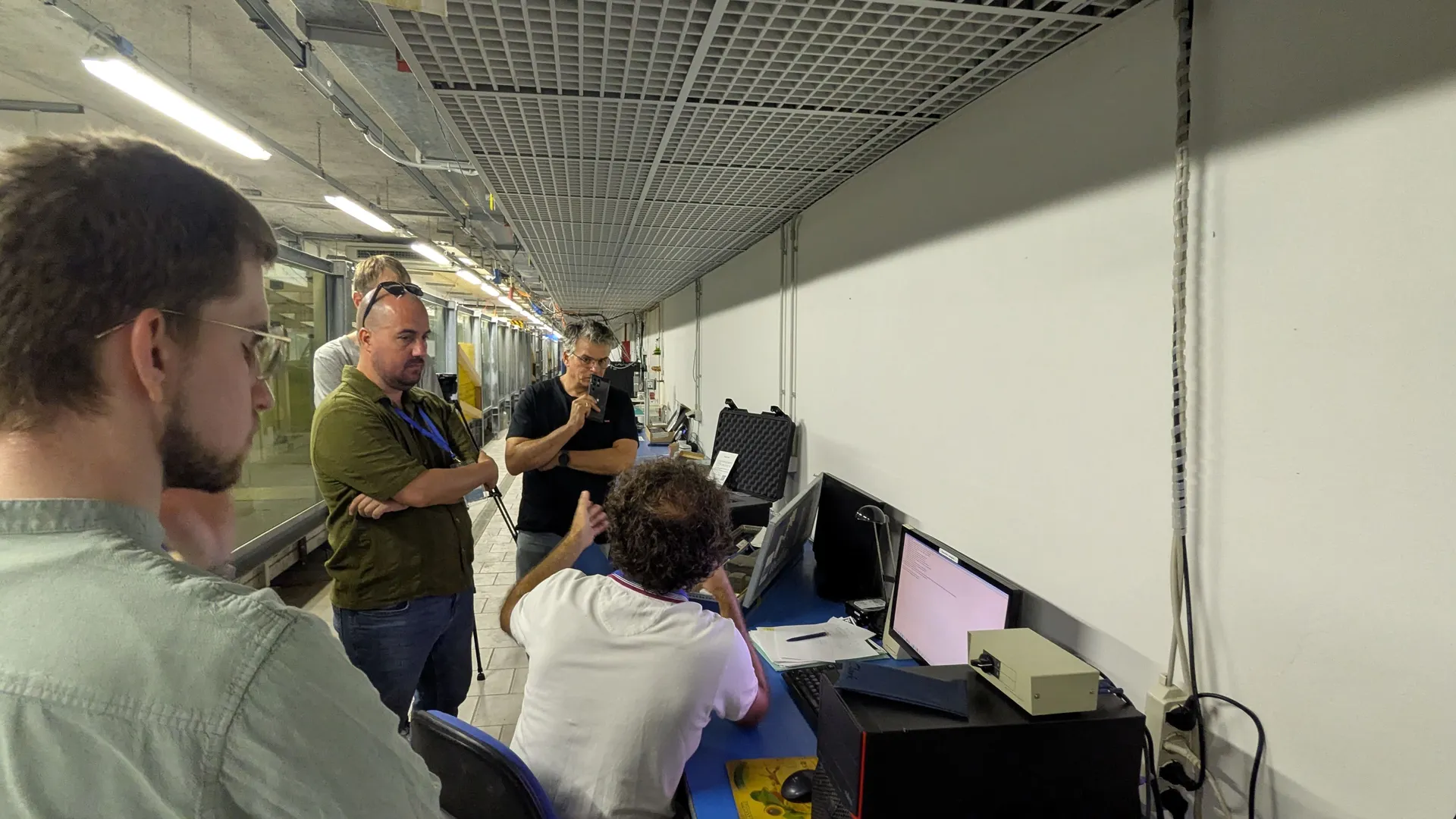
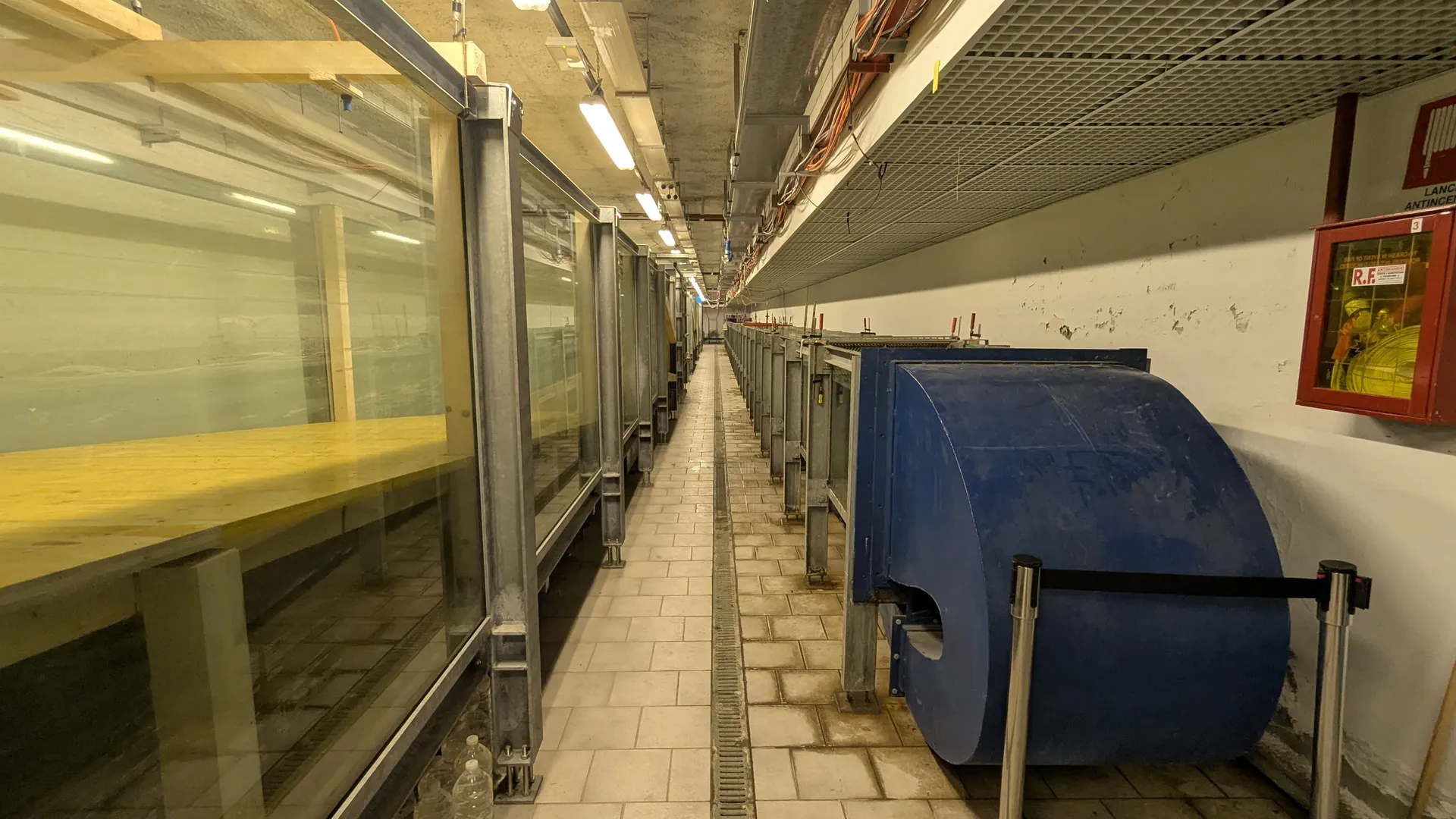
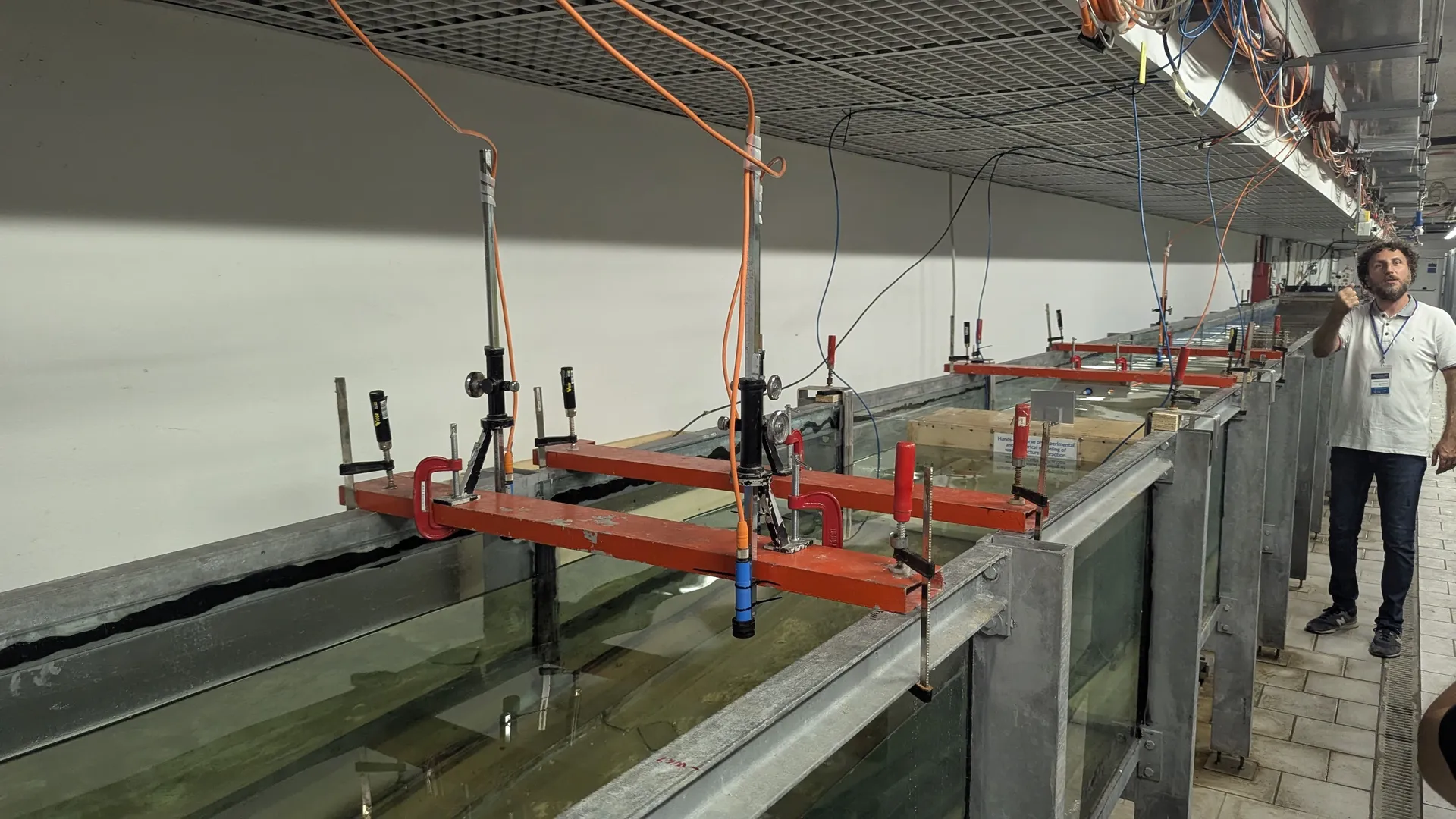
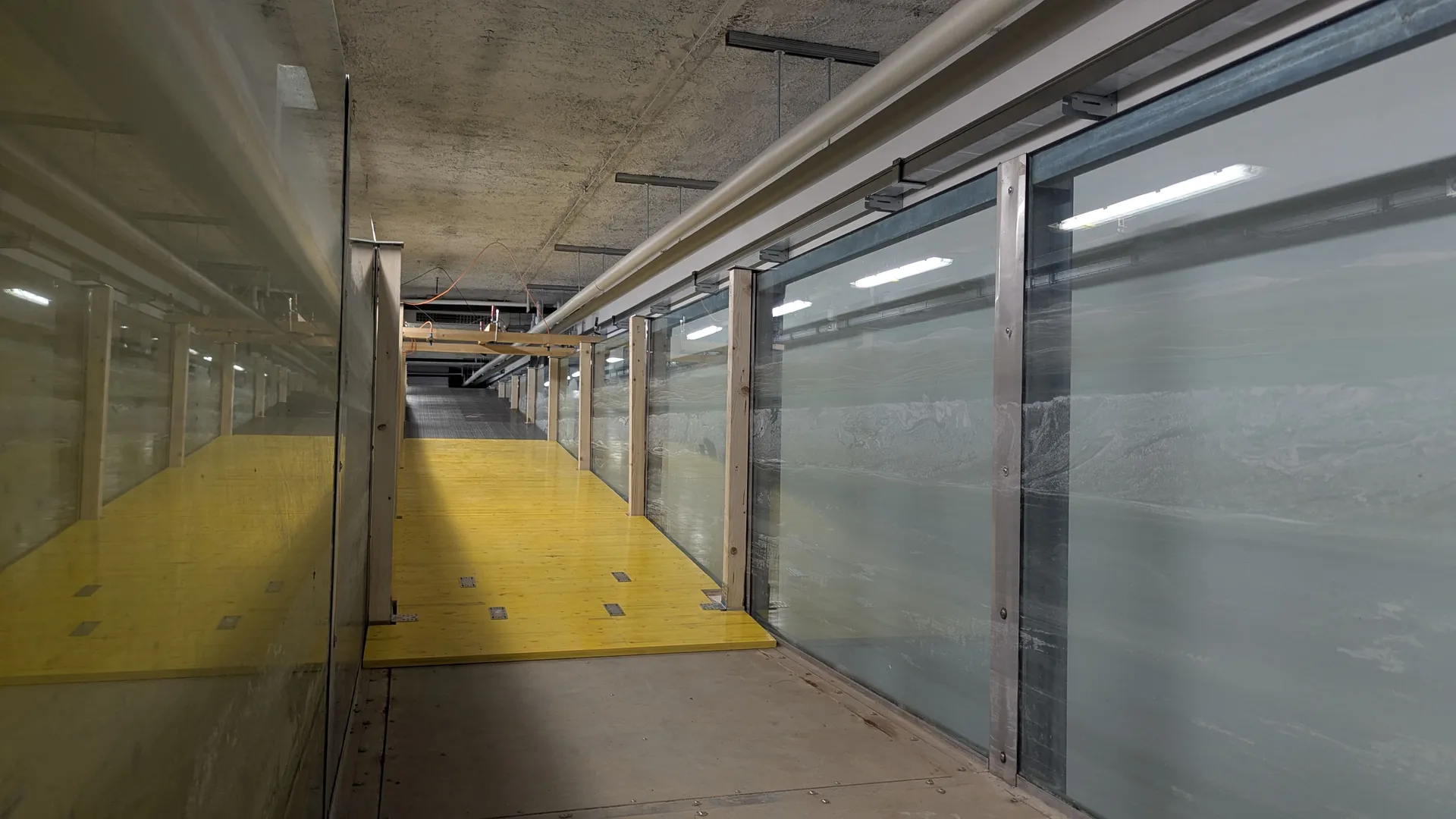
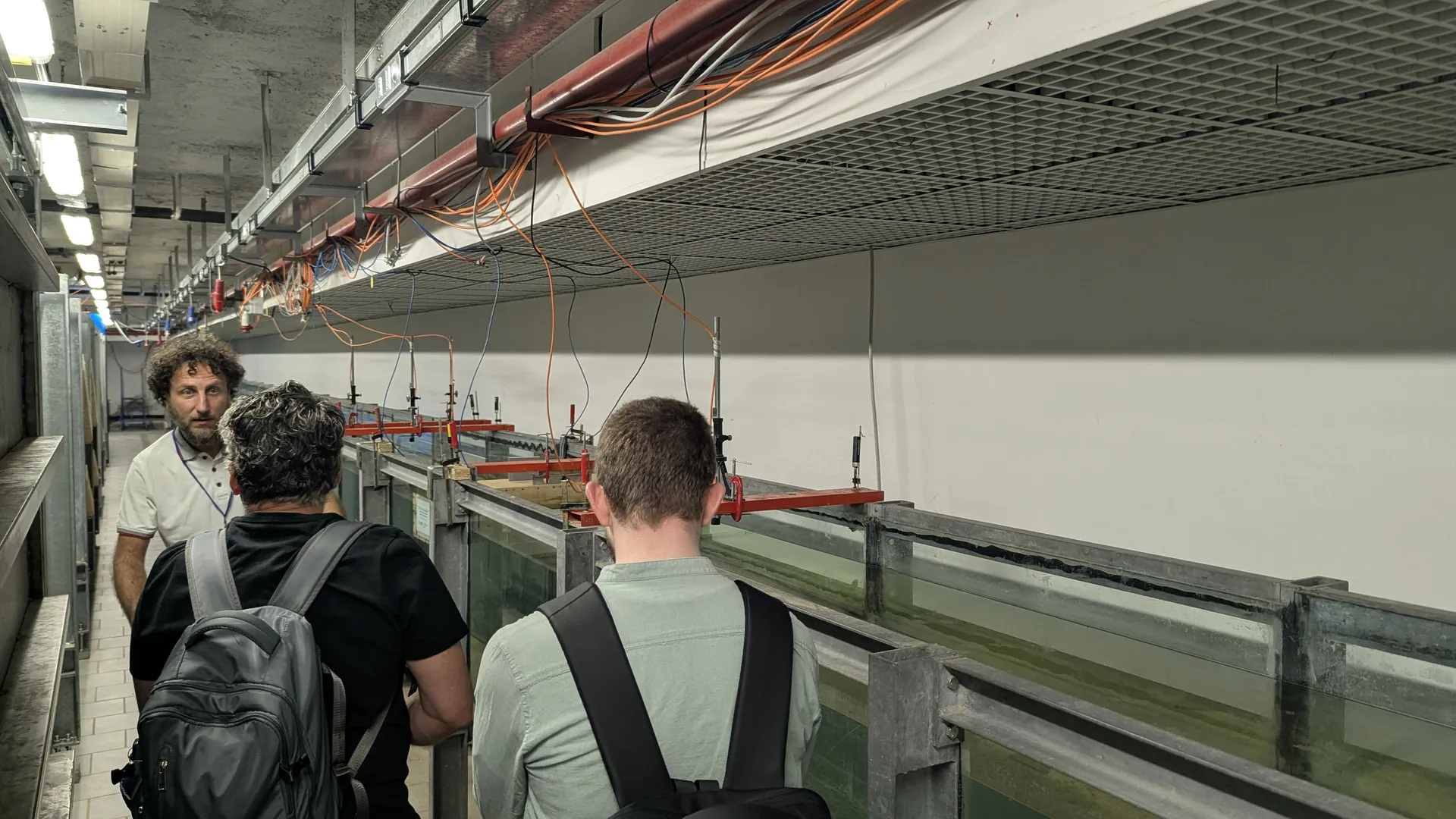
The first two days were spent entirely at the LABIMA Maritime Engineering Laboratory. Working with actual water, sensors, and mechanical constraints brings a necessary reality check to computational engineering. We focused on two distinct experimental cases:
- Fixed Structure Dynamics: We measured the hydrodynamic impact forces and wave run-up on a rigid structure subjected to various wave states.
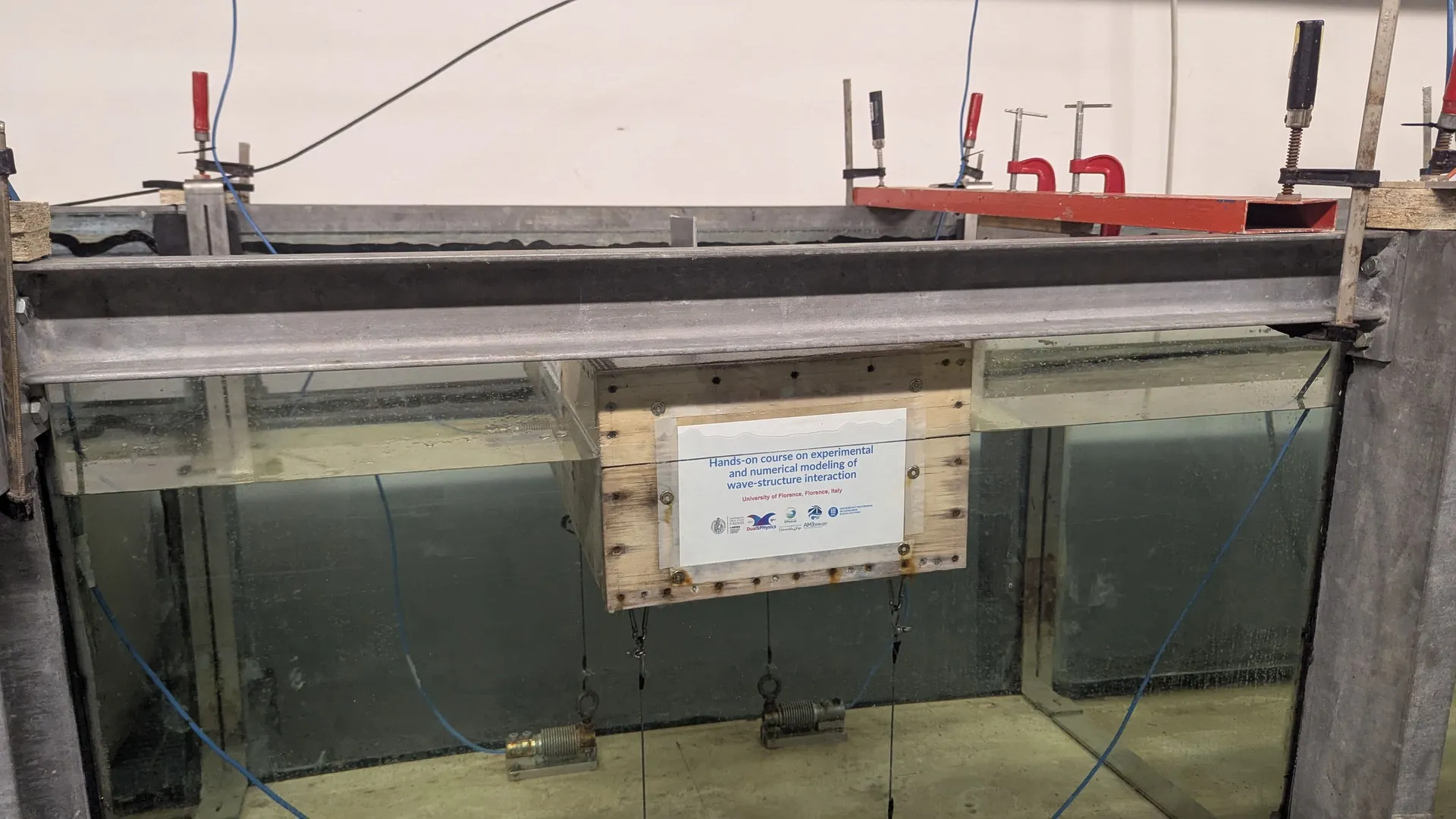
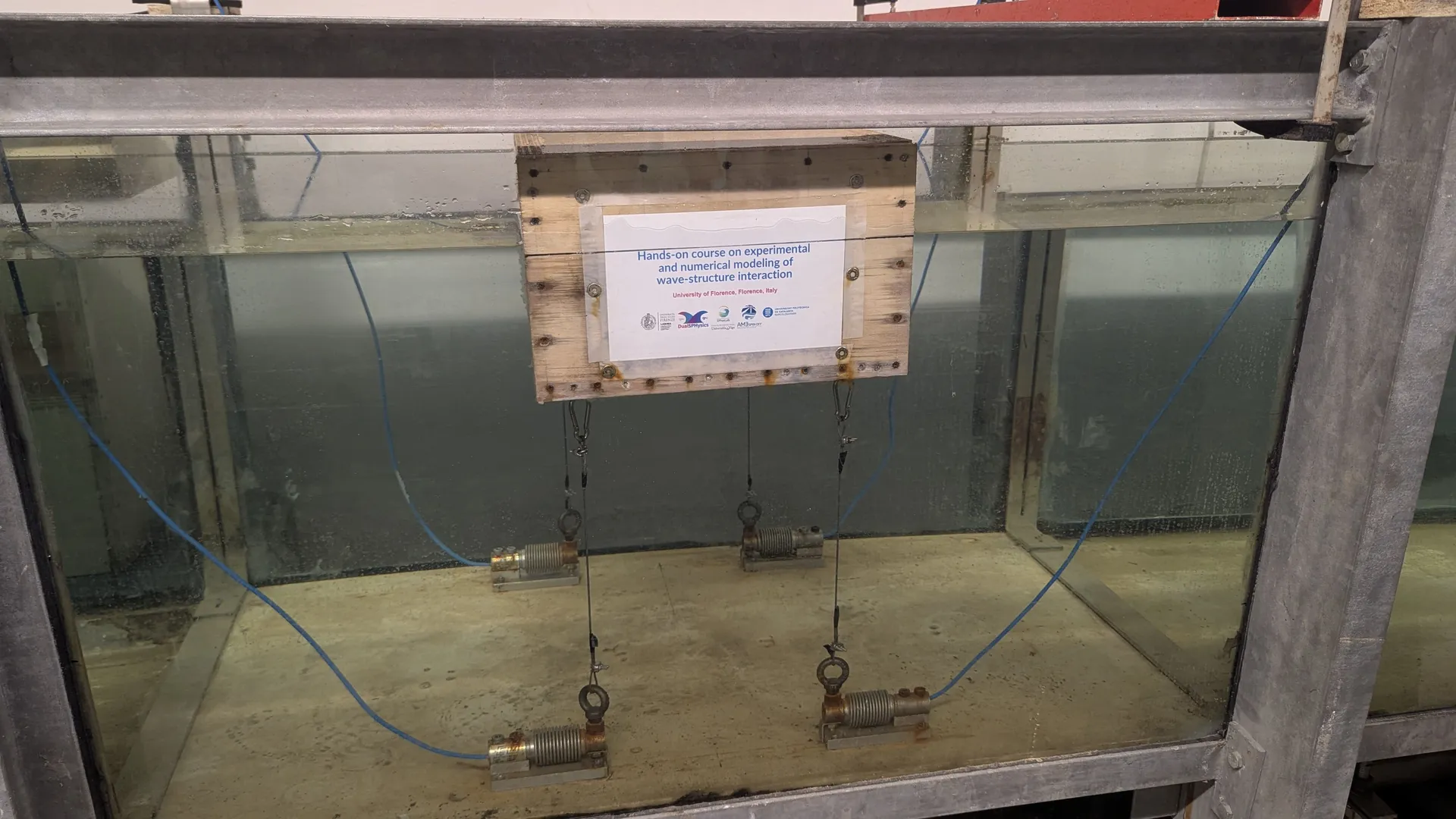
- Floating Moored Device (WEC): We deployed a moored box, carefully tracking its Degree-of-Freedom (Surge motion) displacement and the tension on its mooring lines as it interacted with incoming waves.
We learned how to properly calibrate wave gauges, generate specific wave spectra, and process the raw sensor data into usable metrics for numerical validation.
Phase 2: Numerical Modeling with DualSPHysics
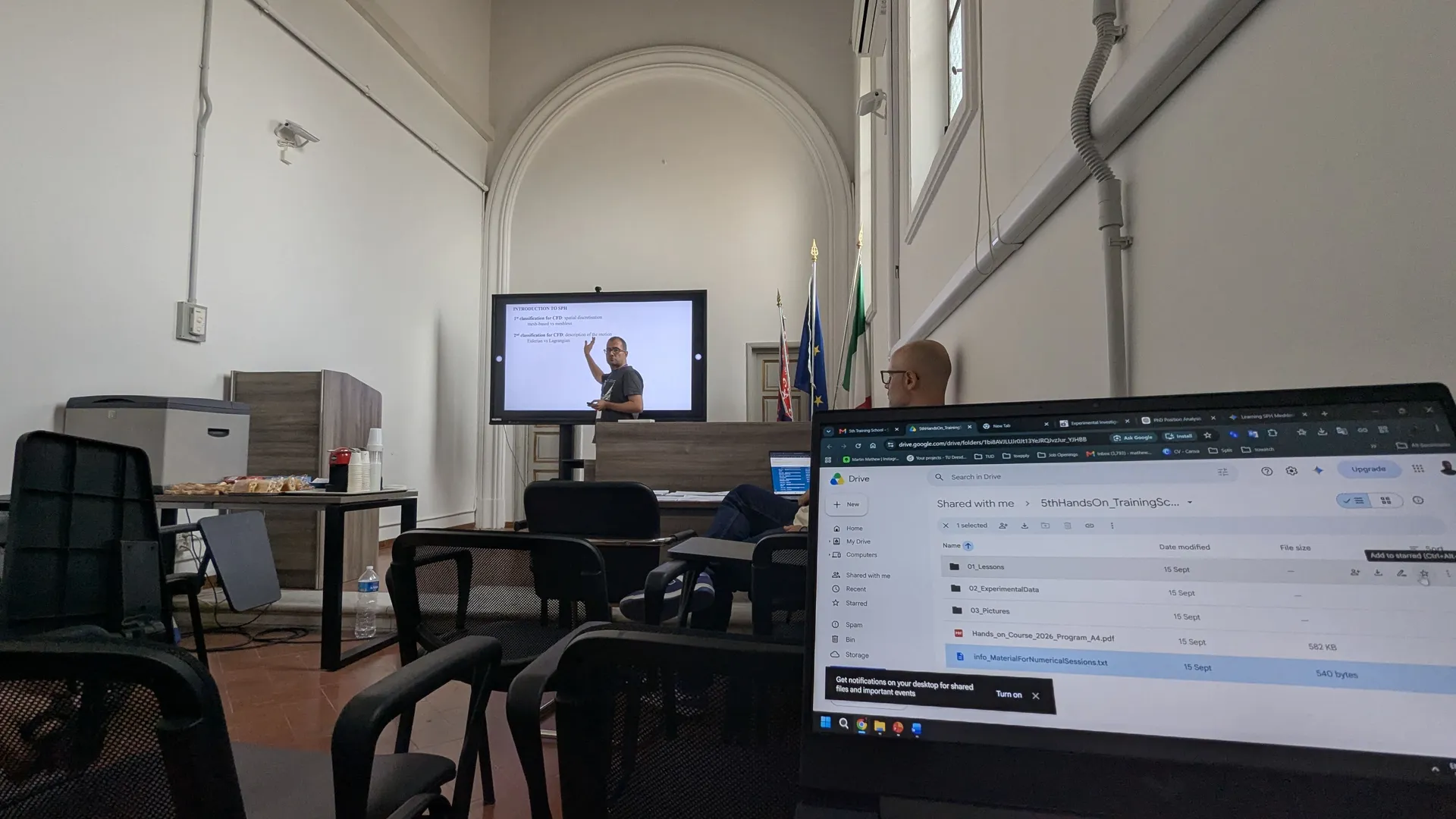
With our physical data collected, the DualSPHysics team led us through the theoretical fundamentals of Smoothed Particle Hydrodynamics (SPH). Unlike traditional mesh-based solvers, SPH is a meshless, particle-based method that excels at capturing highly non-linear free-surface flows and violent wave impacts.
We rebuilt our physical experiments inside the DualSPHysics environment. This is where the Hybrid Wave Tank concept truly clicked. Replicating the fixed structure taught us how to properly define boundary conditions and measure numerical wave impact pressures. Simulating the floating WEC was much more complex, requiring us to accurately couple the fluid dynamics with the mechanical properties of the mooring lines.
Key Learnings and Outcomes
The most valuable takeaway was validating our computational setup against the physical data we had gathered just days prior. Adjusting the numerical parameters until the SPH particle motion perfectly matched the physical wave flume footage highlighted both the capabilities and the assumptions inherent in numerical codes.
The week culminated in a team project where we presented our combined experimental and numerical findings. Beyond the technical skills acquired, it was a fantastic opportunity to collaborate with international researchers and engineers over the work sessions and the social dinner. I left Florence with a much deeper appreciation for the synergy between physical testing and computational fluid dynamics.